2026-08-26T12:32:42.519Z · Cody Hartman
Wiring a Detached Shop or Barn: Feeders, Subpanels and Grounding at a Second Building
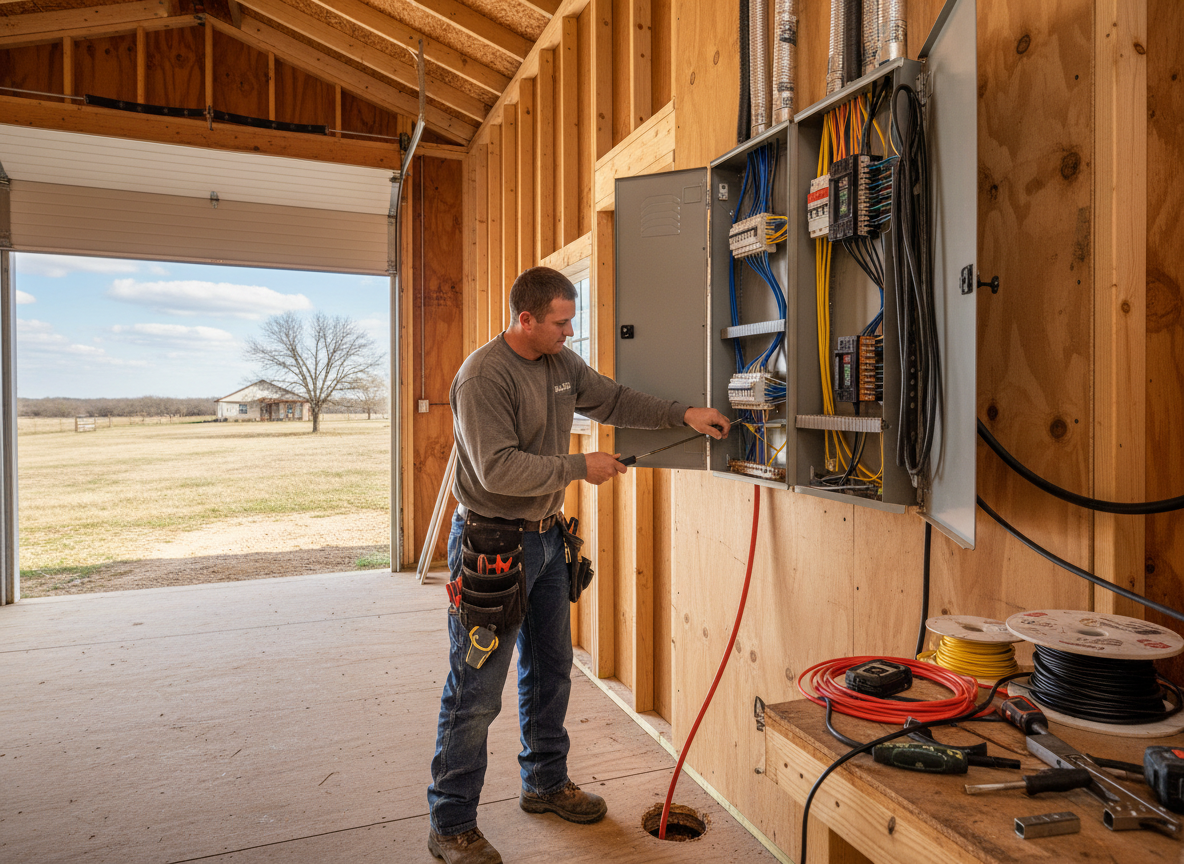
Getting real power to a detached shop or barn takes 4 things done right: a feeder sized for the load and the distance, a subpanel in the building, a disconnect where the feeder lands, and a grounding electrode at that structure. Skip any one and the building will either underperform, trip breakers, or carry a hazard you cannot see.
Start With the Loads, Not the Wire
The design question is what the building will actually run. A hobby shop with lights and hand tools is a modest feeder. Add a welder, an air compressor and a future mini split, and the picture changes completely, because welders and compressors draw hard at startup and the feeder must carry that without sagging. The honest sequence is a load list first, then a load calculation, then the feeder size, with a margin for the tools you have not bought yet. Around Grady County the common answer for a serious shop lands at a 60 to 100 amp subpanel, with small barns doing fine on less.
Distance is the second input. A shop 40 feet from the house and one 250 feet from the meter pole are different projects with the same load list, because voltage drop grows with every foot. Long runs get upsized conductors so the voltage arriving under load stays within limits, which is why a distant building's feeder often costs more than its panel.
The Parts That Make It Legal and Safe
The subpanel in the building distributes power to lighting, receptacle and equipment circuits, and it wants spare spaces, since shops grow. The code requires a separate structure disconnect where the feeder arrives, so the building can be killed without a walk to the house, and it requires a grounding electrode, typically ground rods, at the structure itself, bonded correctly. One detail matters more than any other in the panel work: at a detached building fed with a 4 wire feeder, the neutral and ground stay separate in the subpanel. Bonding them together there, a common DIY mistake, puts normal current on the ground path and on anything metal connected to it.
Overhead or underground is mostly a site decision. Underground in conduit survives Oklahoma wind and looks like nothing, but costs trenching. Overhead spans cost less where poles and clearances allow. Buried runs get marked depth and warning tape, because the next owner's tractor does not know where the cable is.
What Goes In the Building
A shop wired by someone who uses shops gets: 240 volt circuits for the welder and compressor sized to their nameplates, receptacles every few feet at bench height rather than 2 per wall, GFCI protection where code and concrete floors call for it, lighting on its own circuit so a tripped tool circuit does not black the room, and exterior or dusty locations getting fixtures and boxes rated for the conditions. Barns push further: dust tight fixtures, protection from rodents and stock, and switching located where you actually enter.
Permits, Inspection and When to Call It In
A new feeder and subpanel is permitted work, through the City of Tuttle Building and Code department inside city limits and the county and state process outside, with the trench or attachment inspected before it closes. It is genuinely not a weekend extension cord project: the failure modes, backfed neutrals, undersized feeders heating in the ground, missing grounding at the building, are exactly the invisible kind. If an existing shop already shows dim lights when the welder strikes, warm feeder terminations, or a subpanel with neutral and ground tied together, those are the signs the original job cut corners, and they are each fixable without starting over.
FAQ
What size feeder does my shop need?
Whatever the load calculation says after your equipment list is real, plus growing room. Serious hobby shops around here commonly land at 60 to 100 amps, but the distance to the building moves conductor size as much as the load does, so the answer is a calculation, not a rule of thumb.
Can I run the wire from my house panel or does it come from the pole?
Either can be right. It depends on where capacity exists, the distances involved and the panel's condition. On meter pole services the pole is often the cleaner source, and the site look answers it quickly.
Why do my shop lights dim when the welder starts?
Voltage drop on a feeder that is too small for the distance or the load, or a connection going bad. It is measurable at the subpanel under load, and the fix is known once the measurement is done.
When the shop or barn is ready for real power, the residential electrician service for shop and barn wiring handles feeders, subpanels and detached building wiring across the coverage area.