2026-09-03T12:32:42.519Z · Cody Hartman
Who Owns What: Your Meter Base and Pole Versus the Utility's Equipment
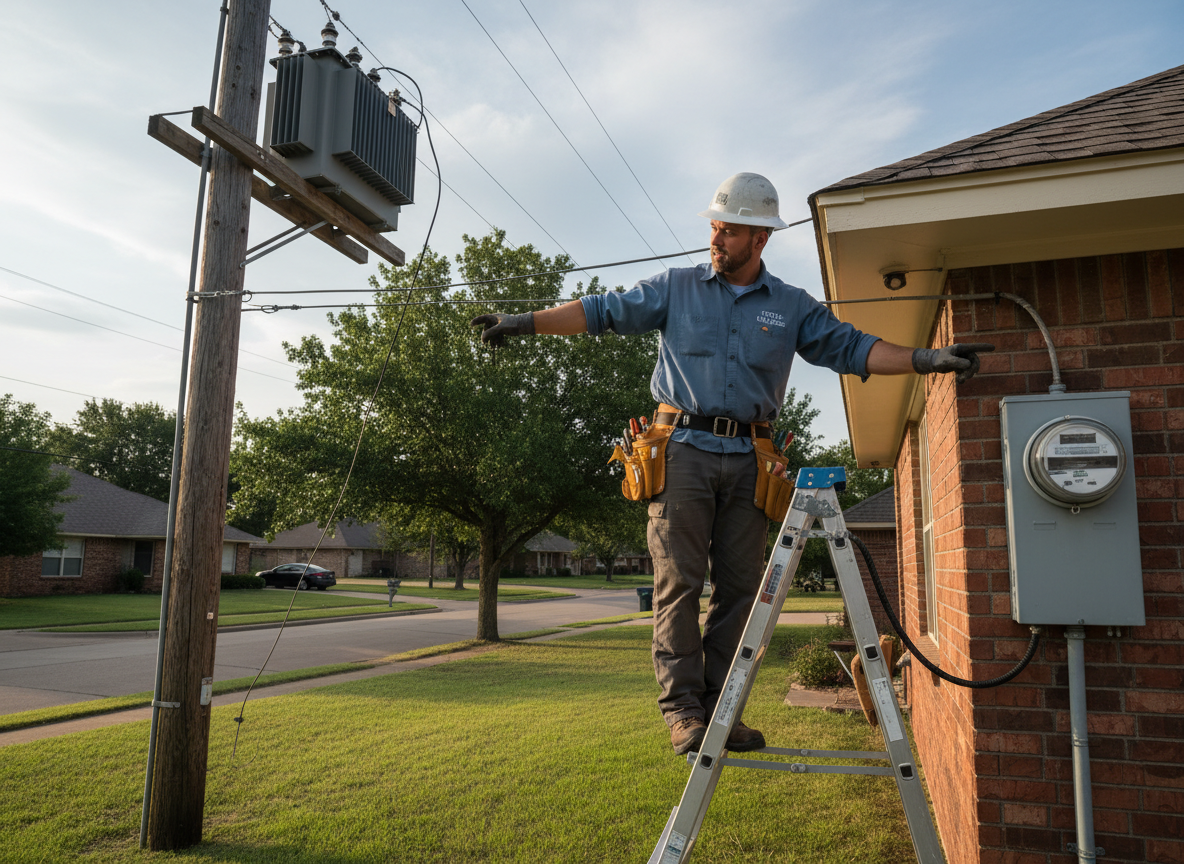
The split is simpler than most homeowners expect. The utility or co-op owns the wires coming to your property and the meter itself. You own the meter base the meter plugs into, the mast or pole that supports the service, and every wire past the meter. When a storm tears that equipment loose, the utility restrings their side, but they will not reconnect until a licensed electrician repairs yours.
The Dividing Line, Piece by Piece
Start at the transformer and walk toward the house. The transformer, the service drop (overhead) or service lateral (underground), and the wires up to the connection point belong to the utility or co-op. So does the meter, the round glass faced device that measures your usage. Everything else is the property owner's: the weatherhead where overhead wires enter, the service mast or the meter pole on rural properties, the meter base the meter plugs into, the service entrance conductors running to the panel, and the panel itself.
On Grady County acreage the picture shifts slightly but the rule holds. Power often lands on a meter pole at the property line, and that pole, its riser, its base and the feeders leaving it toward the house, the shop and the well all belong to the owner. The utility or co-op's responsibility stops where their conductors land.
One wrinkle worth knowing: the exact handoff point can vary between OG&E territory and cooperative territory, and between overhead and underground services. Never assume, ask. But the meter base and the pole are the owner's on every service in this area.
Why It Matters Most After a Storm
Here is the sequence that catches people. A spring front or an ice storm drops a limb on the service. The mast bends, the meter base cracks, wires hang. The homeowner calls the utility, a crew arrives, and then leaves without restoring power, tagging the service instead. Nothing went wrong: the crew is not allowed to reconnect to damaged customer equipment.
The path back to power looks like this:
- A licensed electrician repairs or replaces the mast, weatherhead, meter base or pole.
- The repair is inspected, through the City of Tuttle Building and Code department inside city limits, or the county process outside.
- The utility or co-op is notified and reconnects.
After a wide storm, every step has a queue. The homeowners who get their electrician and their repair moving the first day are the ones back on power while the neighborhood is still waiting.
How to Tell Whose Problem You Have
A few field checks sort most situations:
- Wires down between the road and your house, hardware on the house intact: utility side. Call them and stay far away from the wires.
- Mast bent, meter base pulled off the wall, pole leaning or snapped: your side. Call an electrician, then tell the utility the address will need reconnection after repair.
- Meter glass broken but everything else intact: the meter is theirs, the base is yours, and it usually takes both parties.
- Power out with no visible damage: call the utility or co-op first, since it is likely their outage.
If any conductor is on the ground or within reach, treat it as live and keep everyone away. Downed lines in wet grass do not announce themselves.
What Repairs Cost and When It Becomes a Safety Issue
A straightforward mast and weatherhead repair sits in the hundreds, a full meter base replacement or a new meter pole on an acreage service runs more, and the price moves with damage extent, service size and access. Insurance often covers storm damage to service equipment under the dwelling policy, and the electrician's photos and invoice are the documentation the adjuster wants.
The safety line is simple: a damaged service that still has power is not a wait and see item. A cracked meter base lets water into live equipment, and a strained connection heats up under load. If the service took a hit but the lights stayed on, have it looked at anyway, because the failure that starts at the next storm was usually set up by the last one.
FAQ
The utility said they cannot reconnect me. Why?
Because your meter base, mast or pole is damaged, and reconnecting to damaged equipment is prohibited. A licensed electrician repairs it, the repair is inspected, and then the utility or co-op reconnects. That sequence is fixed, and starting the repair fast is the only way to shorten it.
Is the meter mine or the utility's?
The meter itself belongs to the utility or co-op, and only they touch it. The base it plugs into is yours. That is why a storm repair often involves your electrician and their crew on the same day.
Does insurance cover a broken mast or meter pole?
Often yes, under dwelling coverage for storm damage, minus the deductible. Photograph the damage before repair, keep the invoice, and file promptly. This is general information rather than insurance advice, so confirm specifics with your carrier.
If a storm has left your service hanging, the emergency electrician service for storm damaged services answers around the clock.